
Projects

-
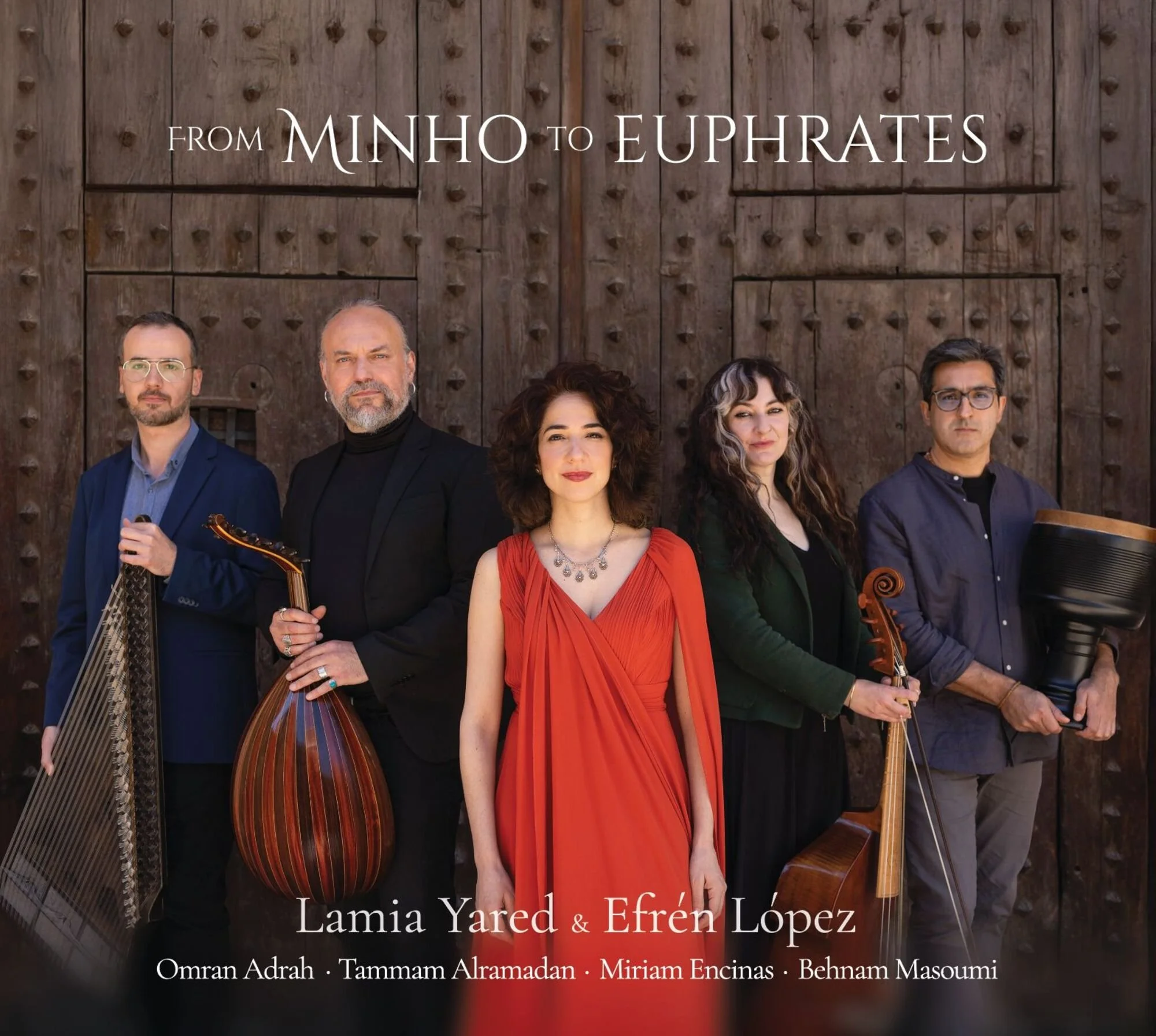
From Minho to Euphrates album
________
Spanning from the Minho to the Euphrates rivers, this album brings together 12th century Cantigas de Santa Maria from the Iberian Peninsula with ancient Syriac hymns, Sufi Muwashahat from Aleppo, and a rare composition attributed to Safī al-Dīn al-Urmawī, a 13th century master of the late Abbasid court in Baghdad.
A key part of this recording is my collaboration with esteemed colleague Efrén López, who arranged the Cantigas and composed Asbe Sangi. Together, we developed a modal framework that bridges Arabic musical traditions with Galician medieval repertoire, while also drawing on Persian influences embedded in the Syriac legacy.
This album is also a reconnection to my Syriac-Maronite heritage through traditional a cappella hymns, now uniquely accompanied by the outstanding musicians: Omran Adrah (qanun), Tammam Alramadan (nay), Miriam Encinas Laffitte (viola da gamba), Efrén López (oud, gittern, barbat, hurdy-gurdy, and choir), and Behnam Masoumi (tombak, bendir).
-
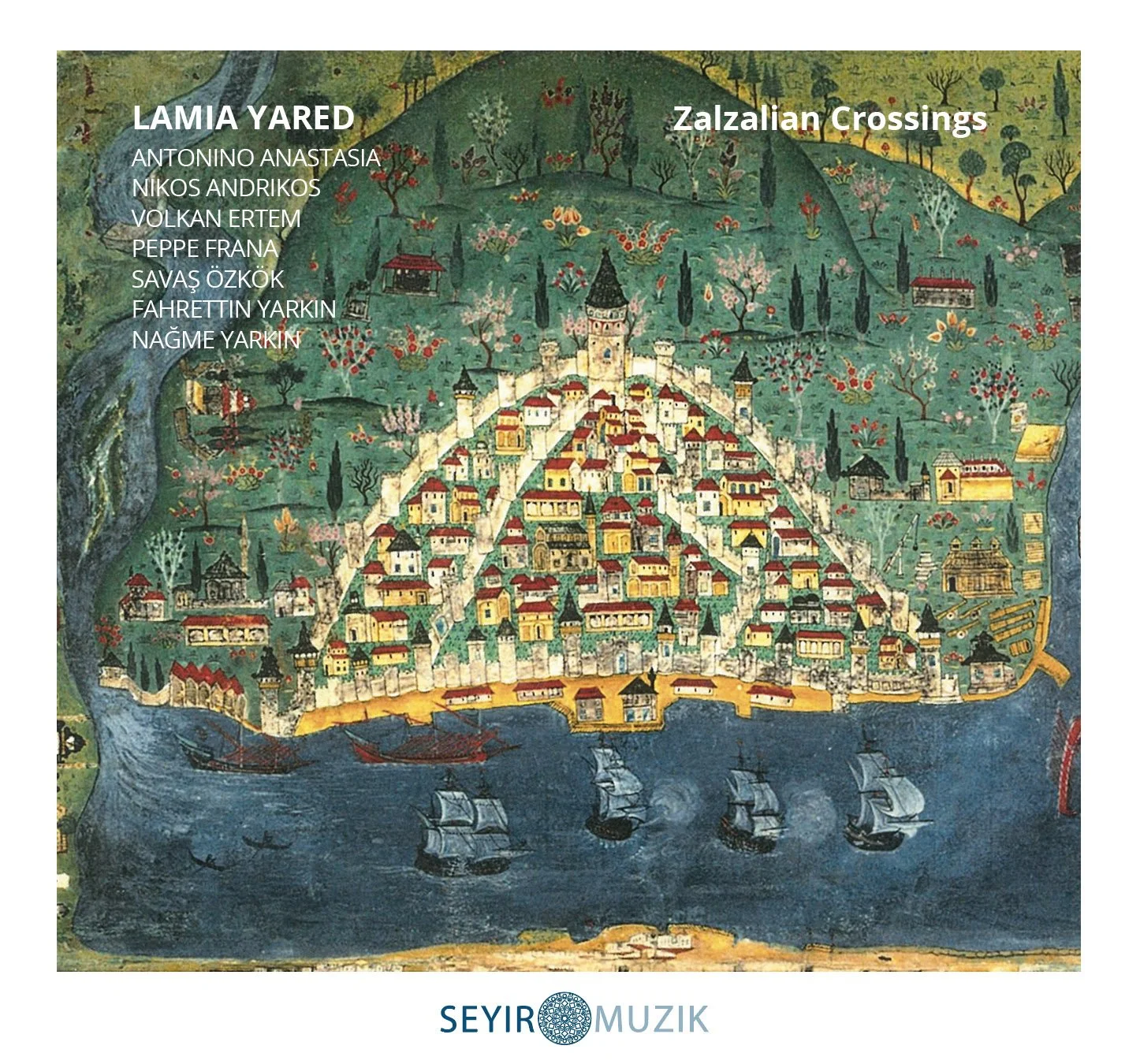
Zalzalian Crossings album
_________
Rooted in Ottoman Turkish and Arabic classical repertoires, and in dialogue with the Italian Trecento tradition, this recording brings together Lamia Yared (vocals, composition) alongside an ensemble of distinguished collaborators: Antonino Anastasia (tamburello, riqq, bendir), Fahrettin Yarkın (daîre, bendir), Nağme Yarkın (Istanbul kemençe), Nikos Andrikos (lavta, guest vocals), Peppe Frana (lute, oud, arrangements), Savaş Özkök (kanun), and Volkan Ertem (cello).
At the crossroads of Istanbul, Florence, and the Mashreq, the album unfolds as a musical journey shaped through both collective and individual arrangements. Zalzalian Crossings brings together muwashshaḥāt, şarkılar, and Trecento repertoire within a modal suite inspired by the wasla form.
The program emphasizes rarely performed works from the muwashshaḥ tradition by composers such as Omar al-Batch and Ali Darwish, placed in dialogue with earlier sources including Dede Efendi, and reinterpreted through Byzantine manuscript traditions alongside medieval Florentine repertoire.
-

Ottoman Splendours album
————
Lumières ottomanes explores the shared music along a spatio-temporal axis connecting Asia Minor, the modern and contemporary Balkans, and the medieval Iberian Peninsula. Composed of Didem Başar (qanun and arrangements), Omar Abou-Afach (viola), Olivier Bussières (percussion), and Lamia Yared (vocals and oud), the ensemble highlights the Sephardic memory that reveals a musical heritage inspired by the coexistence of Greek, Turkish, and Sephardic communities within the Ottoman Empire.
-
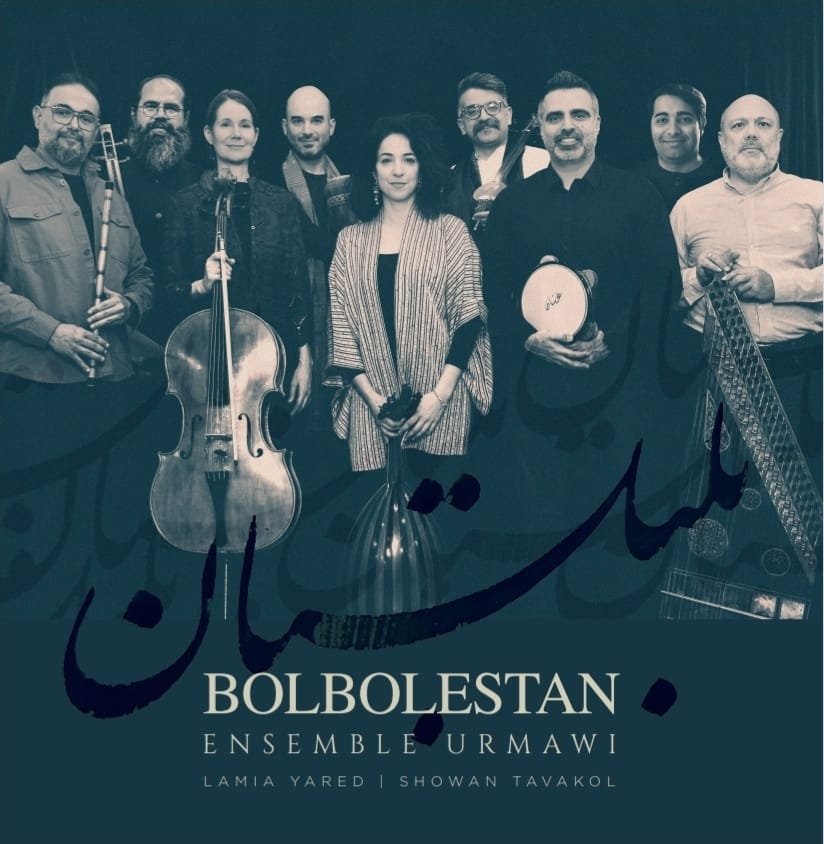
Bolbolestan album
_________
Like the land of the Nightingale (Bolbolestan), Ensemble Urmawi will release its eponymous album by January 2027. The program features an original composition by Showan Tavakol alongside tasnifs, muwashshahāt, and improvised pieces. This project brings contemporary works into dialogue with the learned musical traditions of the Arab and Persian worlds.
With Lamia Yared, Showan Tavakol, Sheila Hannigan, Joseph Khoury, Nizar Tabcharani and special guests: Mehdi Bahri, Araz Salek, Ziya Tabassian and Ayman Trabelsi
-

Chants des Trois Cours album
—————
Chants des Trois Cours album brings the audience to the golden age of the Ottoman era. Lamia Yared, accompanied by an ensemble of virtuoso musicians — Didem Başar (qanun), Reza Abaee (gaychak), Nazih Borish (oud), Ziya Tabassian (tombak and daire), Joseph Khoury (riqq and bendir), Noémy Braun (cello), and Jérémi Roy (double bass) — explores a wide range of poetry from the palaces of the Ottoman court, the Levant, and Samarkand, drawing from Arab, Turkish, and Persian traditions. Honoring the intertwined heritage of these cultures, Lamia Yared brings together masters of the music from the three Eastern regions: Turkey, the Levant (Syria-Lebanon), and Persia (Iran).
-

Ensemble Urmawi
_________
Ensemble Urmawi presents a wide musical spectrum, spanning from the Levant region (Syria and Egypt) all the way to Central Asia. It brings together musicians from Arab and Persian musical traditions, highlighting the Muwashah, paired with the Tasnif. The ensemble includes Showan Tavakol (kamancheh and compositions), Nizar Tabcharani (qanun), Sheila Hannigan (cello), Joseph Khoury (percussion), and Lamia Yared (vocals, oud, artistic direction).
-
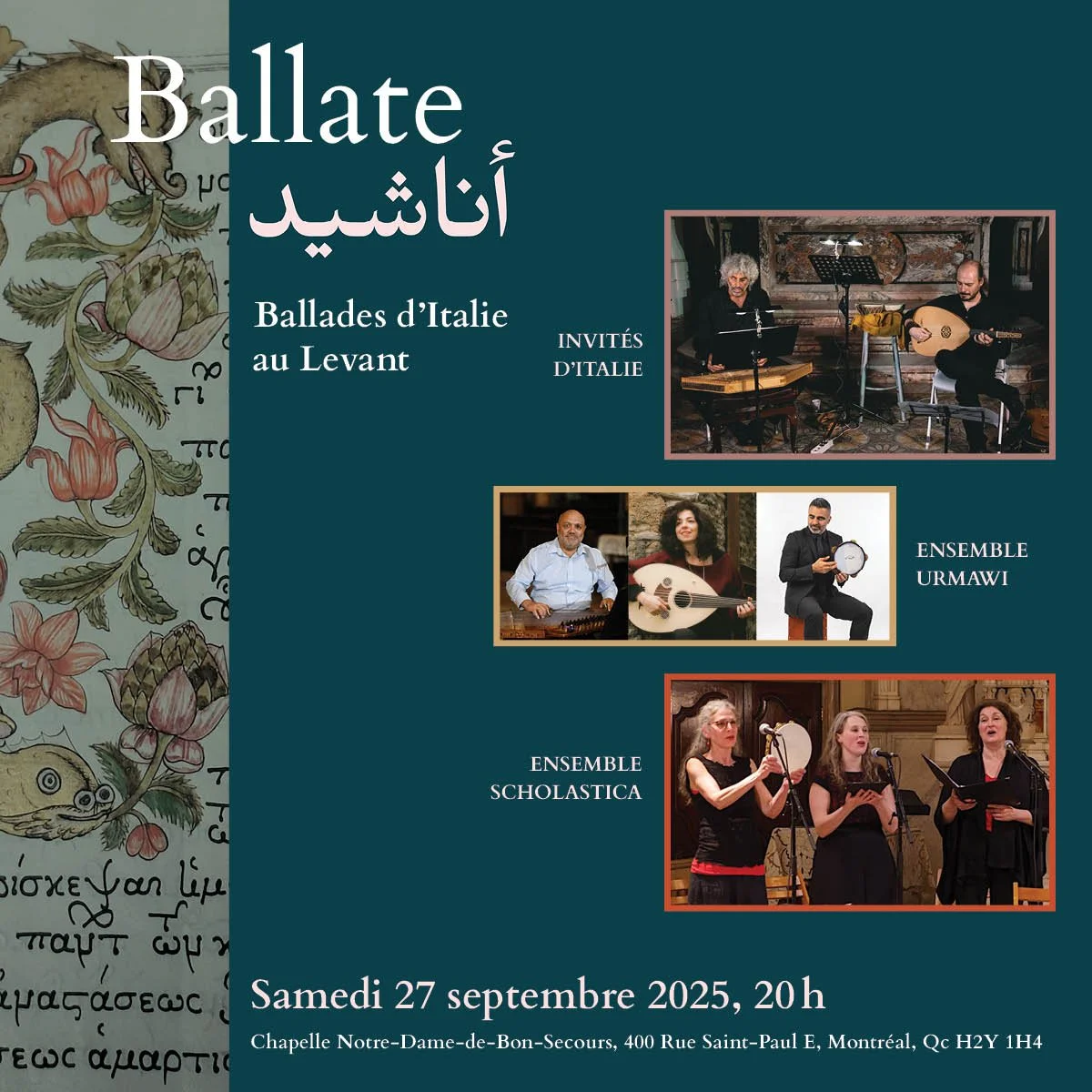
Ballate
_________
Ensemble Urmawi (direction Lamia Yared) and Ensemble Scholastica (dir. Rebecca Bain) join forces together with two exceptional guests from Italy:
Enea Sorini (voice, tamburello) and Peppe Frana (medieval lute, gittern) to collaborate on a program that will take listeners on a journey between Levantine music and the Italian Trecento (14th century).
Ensemble Scholastica: Rebecca Bain (voice, vielle), Angèle Trudeau (voice, symphonia), Élodie Bouchard (voice, rebec)
Ensemble Urmawi: Lamia Yared (voice, oud), Nizar Tabcharani (qanun), Joseph Khoury (percussion)
Concert on September 27th 8pm 2025, at the Notre-Dame-de-Bonsecours Chapel, Montréal.
-

Fréquences de Byzance
—————
Fréquences de Byzance invites the audience to discover the chants of the early Eastern Christians, as well as the hymns of the Phanariot and liturgical traditions dating back to the Byzantine era. Fréquences de Byzance takes on the challenge of revealing these centuries-old musical traditions, offering the public an immersive experience in the sacred music of the Near East, Phanariot chants, and Ottoman music.
-

Portraits du Levant
————
Portraits du Levant brings together the many gems of Near Eastern music, including the repertoire of Mohammed Abdel Wahab, Halim El Roumi, and the classical Turkish music composer Sadettin Kaynak. The concert is presented in collaboration with OktoEcho, featuring musical arrangements by Alexandre Grogg and Ramzi Kandalaft. The ensemble includes Naeem Shanwar (qanun), Amijai Shalev (bandoneon), Joseph Khoury (riqq and bendir), and Abdel-Wahab Kayyali (oud).